


The waistline trilogy that separates “wearing a suit” from understanding a suit
Men’s tailoring is full of “details” that aren’t really details. They’re structural choices—engineering decisions—built to control proportion, comfort, and formality.
Three of the biggest are:
- where your trousers sit (high-waist / rise),
- how they stay there (side adjusters vs belts vs braces),
- and how black tie finishes the waist (the cummerbund).
If you get the waistline right, the outfit looks more expensive—even if nothing else changes. If you get it wrong, even the best jacket in the world will feel slightly off. This article covers the full history, function, and modern styling of all three.
Part I — High-waisted trousers: the original “default setting” of menswear
1) What “high-waisted” actually means (in tailoring terms)
“High-waisted” is not a vibe. It’s a measurement.
- Rise = distance from the crotch seam to the top of the waistband.
- High rise trousers sit at/near the natural waist (around the navel).
- Mid rise sits between the navel and hip bones.
- Low rise sits at the hip bones or below.

The key point: when trousers move up, your whole silhouette changes—leg line lengthens, torso looks cleaner, and jackets behave how they were designed to behave.
2) Why high waists were historically normal
For a long stretch of modern menswear history—especially the late 19th to early/mid 20th century—higher rises were common and often expected. The natural waistline worked with the tailoring of the time (jacket lengths, button stances, waist suppression), and trousers were often supported by braces rather than belts.

Many historical fashion write-ups describe men’s trousers in the 1920s–1950s as typically sitting at the natural waist, with higher rises being a norm rather than a novelty.
Trivia you can use at a fitting:
Victorian-era trouser development is often described as a period where waistbands rose toward the natural waist height, alongside other construction changes such as fly-front closures replacing fall-front designs.
3) Why modern men think high-rise is “retro”
Because mainstream fashion pushed the waistline down later.
Contemporary commentary often frames “high-rise returning” as a trend because the last few decades trained people to treat hip-slung trousers as the default. Modern menswear media has also covered the resurgence of higher rises (especially from designers and runway-to-street movement), positioning it as a swing away from early-2000s low-rise silhouettes.
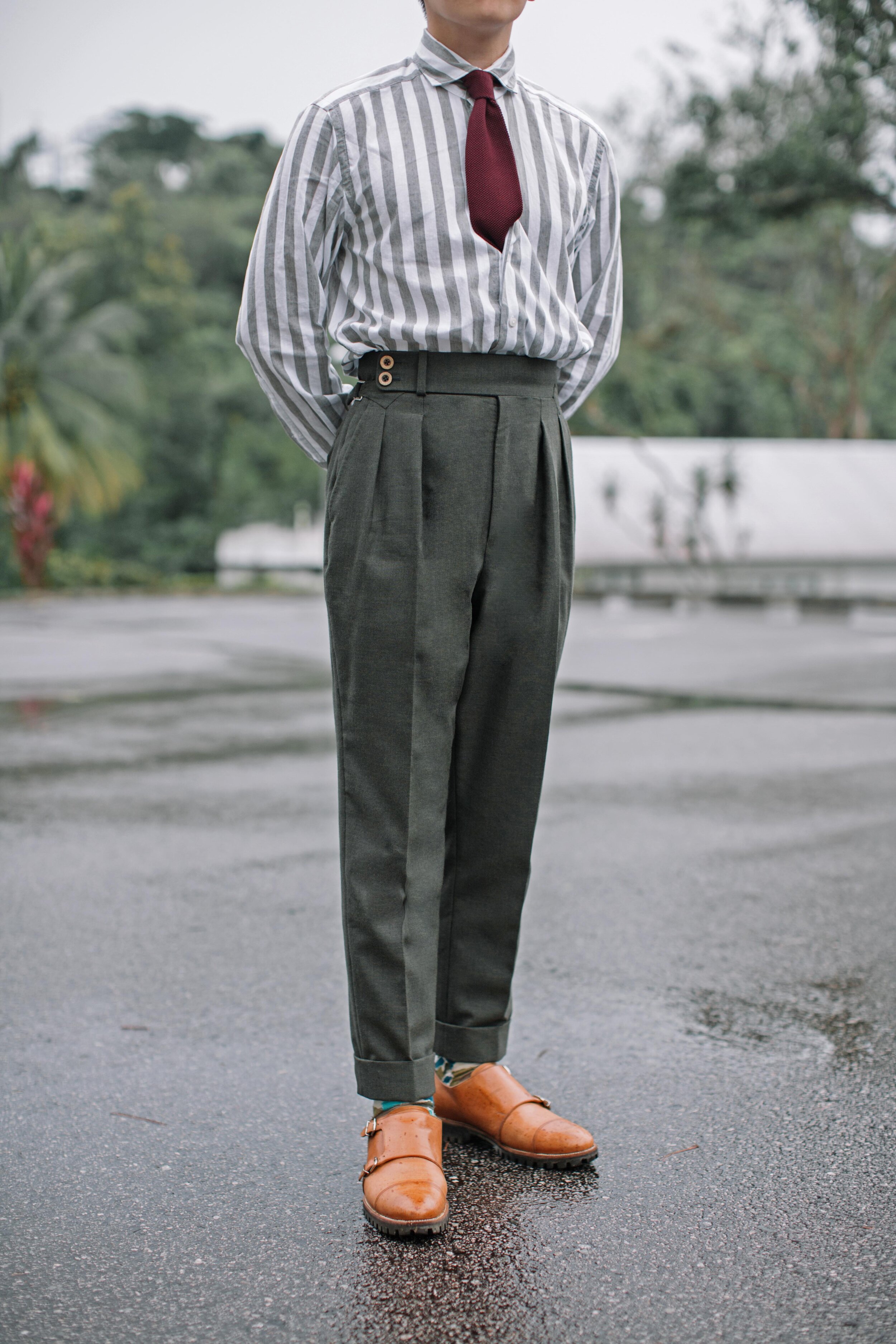
Mr. Fierze translation:
High-waisted trousers aren’t a trend. They’re a correction.
Part II — Why high-waisted trousers work (the function, not just the look)
4) Proportion: suits were designed around a higher waistband
Tailored jackets have a visual “centre” around the waist. If your trousers sit too low, you get:
- excess shirt showing between jacket button point and trouser top,
- a chopped-up torso,
- and a jacket that looks shorter than intended.
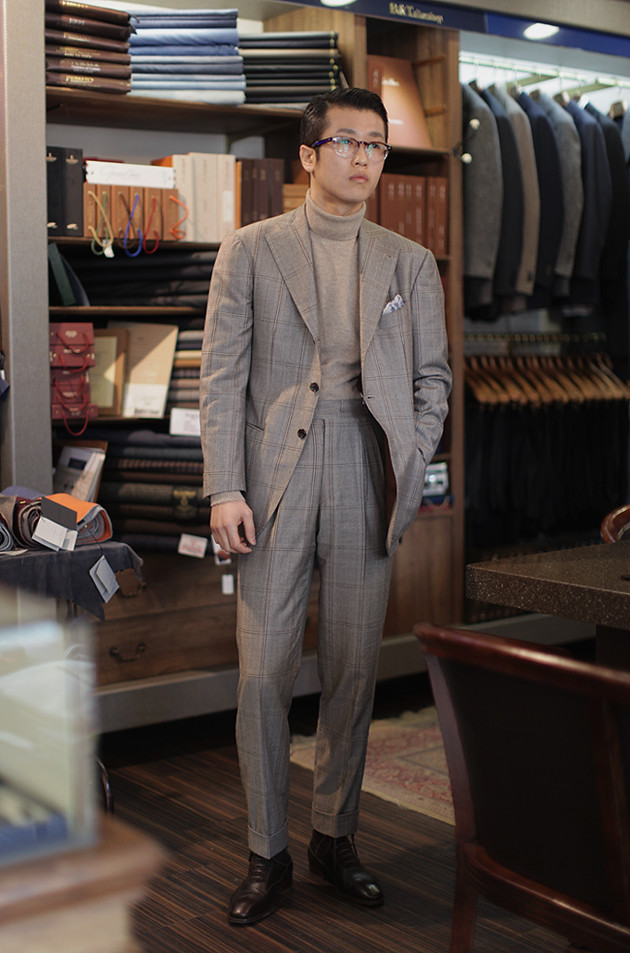
High-rise trousers reduce this awkward gap and restore the classic “column” line: chest → waist → leg.
5) Comfort: the natural waist is a more stable anchor point
Hips move constantly (walking, sitting, driving). A low waistband is more likely to:
- slide down,
- dig in,
- force constant shirt re-tucking,
- and make you feel like you’re adjusting yourself all day.
Higher rise sits on a more stable part of the body and often stays put more reliably—especially when paired with braces or adjusters.

6) Movement: higher rise supports better drape (especially with pleats)
Pleats aren’t decoration. They’re functional volume.
A higher rise can help pleats open naturally (instead of pulling or tenting). This is why high-rise + pleats often looks “expensive” even in motion.
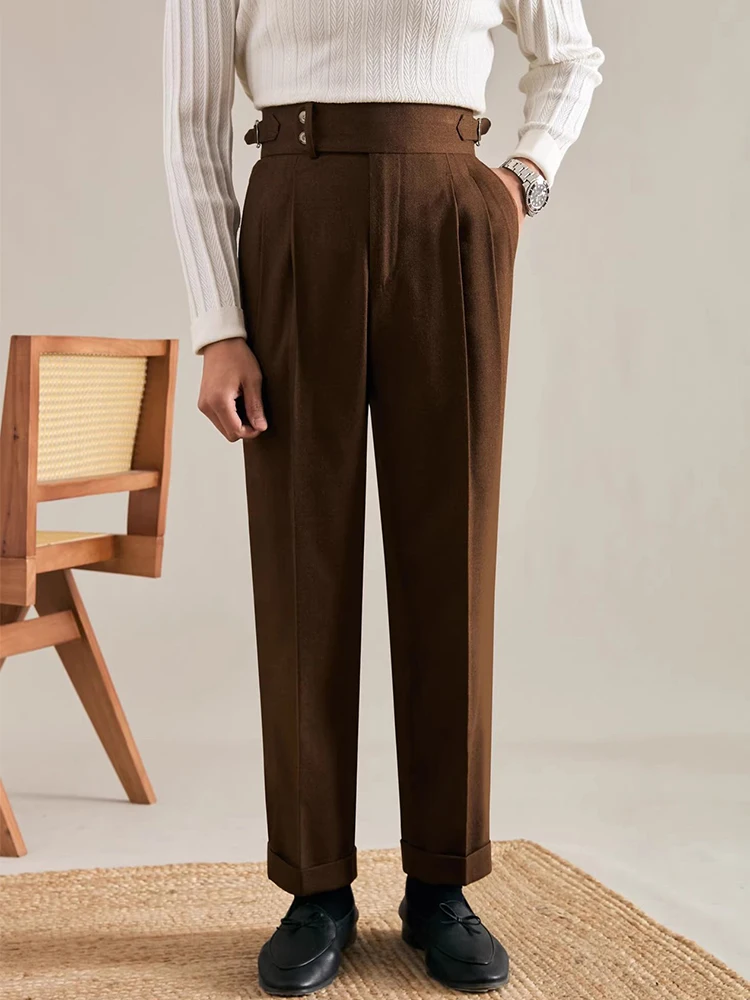
Part III — Side adjusters: the clean-waist alternative to belts
7) What side adjusters are
Side adjusters are waistband tightening systems built into trousers, usually:
- a strap + buckle on each side, or
- a tab/button system, or
- internal mechanisms (sometimes historically associated with “DAKS-style” solutions).
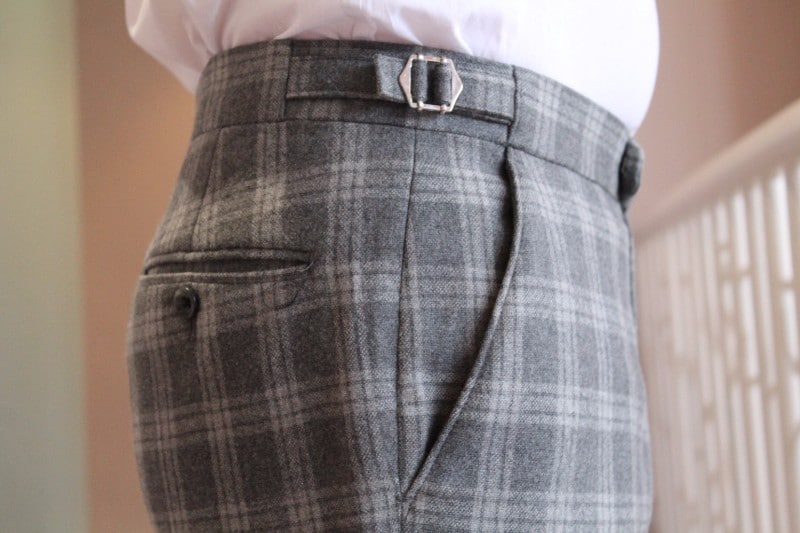
Their job is simple: keep trousers fitted without needing a belt.
8) The big historical anchor: DAKS and “self-supporting trousers” (1934)
If you want a firm “roots” reference for modern waistband adjustability, DAKS is one of the most cited.
DAKS’ own brand history states that in 1934, Alexander Simpson invented the “self-supporting trouser,” using an adjustable waistband to remove the need for belts and braces, initially motivated by sport practicality (e.g., braces impeding movement, shirts riding up).
Industry and heritage write-ups also repeat the 1934 invention/patent narrative and highlight how the “self-supporting waistband” became associated with the “DAKS waistband.”

Important nuance (so you sound like you really know your stuff):
“Side adjusters” as we see them today (external buckles/tabs) are not identical to every historic “self-supporting” internal system—BUT the DAKS story is a major documented milestone for the idea of beltless waist adjustment becoming commercially meaningful.
9) When side adjusters became common in tailoring
Several menswear references discuss adjustable waist systems and side adjusters as being present in bespoke British tailoring and becoming more common in the mid-20th century. For example, one breakdown notes that by the 1950s it was common for English tailors to make trousers with adjustable waistband systems as alternatives to braces.

Other modern tailoring explainers describe side adjusters as a longstanding feature in higher-end trousermaking, and many contemporary brands position them as the more “elevated” waist fastening option compared with belt loops.
Part IV — Side adjusters vs belts vs braces: the real pros/cons
10) Belts: convenient, but visually disruptive in tailoring
Belts are practical—but they can:
- interrupt the clean line of a suit,
- add bulk under a fitted jacket or waistcoat,
- and create pulling because tension is centred at the buckle.
Style truth:
Belts are often best when the outfit is built around a belt (chinos, denim, casual tailoring). In classic suiting, beltless options usually look cleaner.
11) Braces (suspenders): the gold standard for consistent height
Braces suspend trousers from the shoulders, keeping the waistband stable at a set height. If your goal is perfect drape and consistent rise, braces are unbeatable.
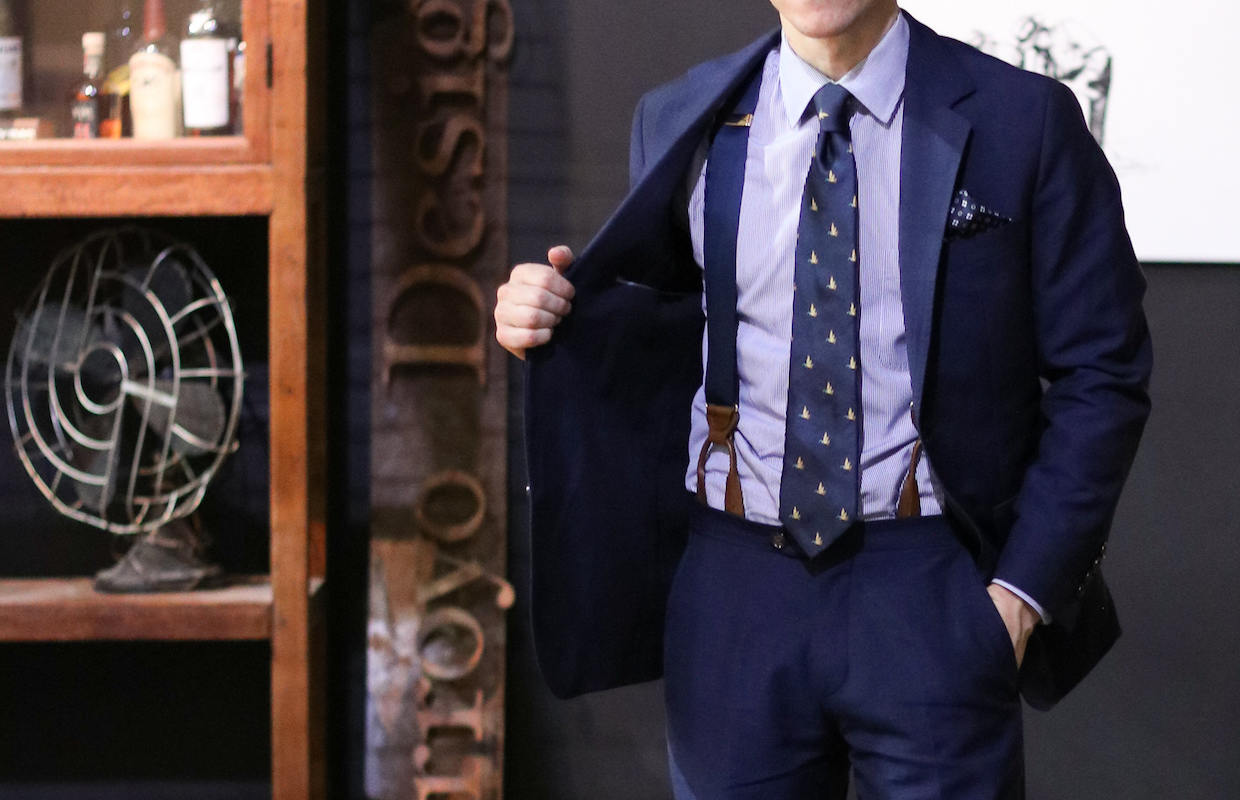
But: some people dislike straps, warmth, or the feel—so side adjusters become the modern “clean compromise.”
12) Side adjusters: the elegant middle path
Side adjusters:
- keep the waistband clean,
- remove buckle bulk,
- allow small fit changes across the day,
- and look especially correct with high-rise trousers and waistcoats.
One menswear source outlines how side adjusters solve multiple trouser fit issues without the drawbacks of belts.
Part V — Types of side adjusters (deep nerd section)
13) External buckle side adjusters (the most recognisable)
- Strap emerges from waistband.
- Buckle sits at the side seam or slightly forward.
- Tightening draws fabric evenly around the waist.
Micro-trivia:
Placement matters. A buckle too far forward can look like hardware; too far back becomes hard to access. Tailors often aim for a position that tightens without distorting the front crease line.
14) Button-tab adjusters
- A tab tightens through button positions.
- Often cleaner visually than buckles.
- Great for minimalists.
15) Internal “DAKS-style” adjustable mechanisms
Some references describe the “DAKS waistband” concept as involving internal elasticated structures tightened by buttoning positions—historically associated with the 1930s–40s popularity.
Part VI — The cummerbund: the black-tie waist finisher with real colonial history
16) What a cummerbund is (and what it’s for)
A cummerbund is a broad waist sash—typically pleated—worn with a dinner jacket/tuxedo to:
- cover the trouser waistband,
- hide the shirt “break,”
- and create a clean transition between shirt and trousers.
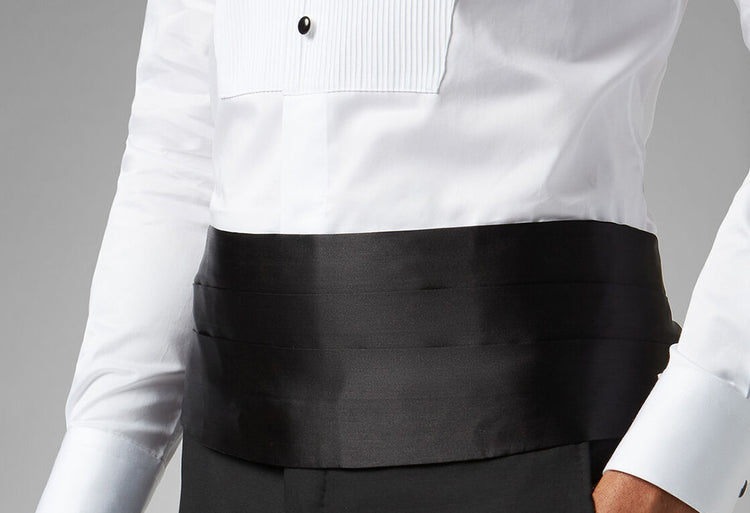
This is widely described as its modern function within black tie.
17) Where it comes from: India → British adoption → Western black tie
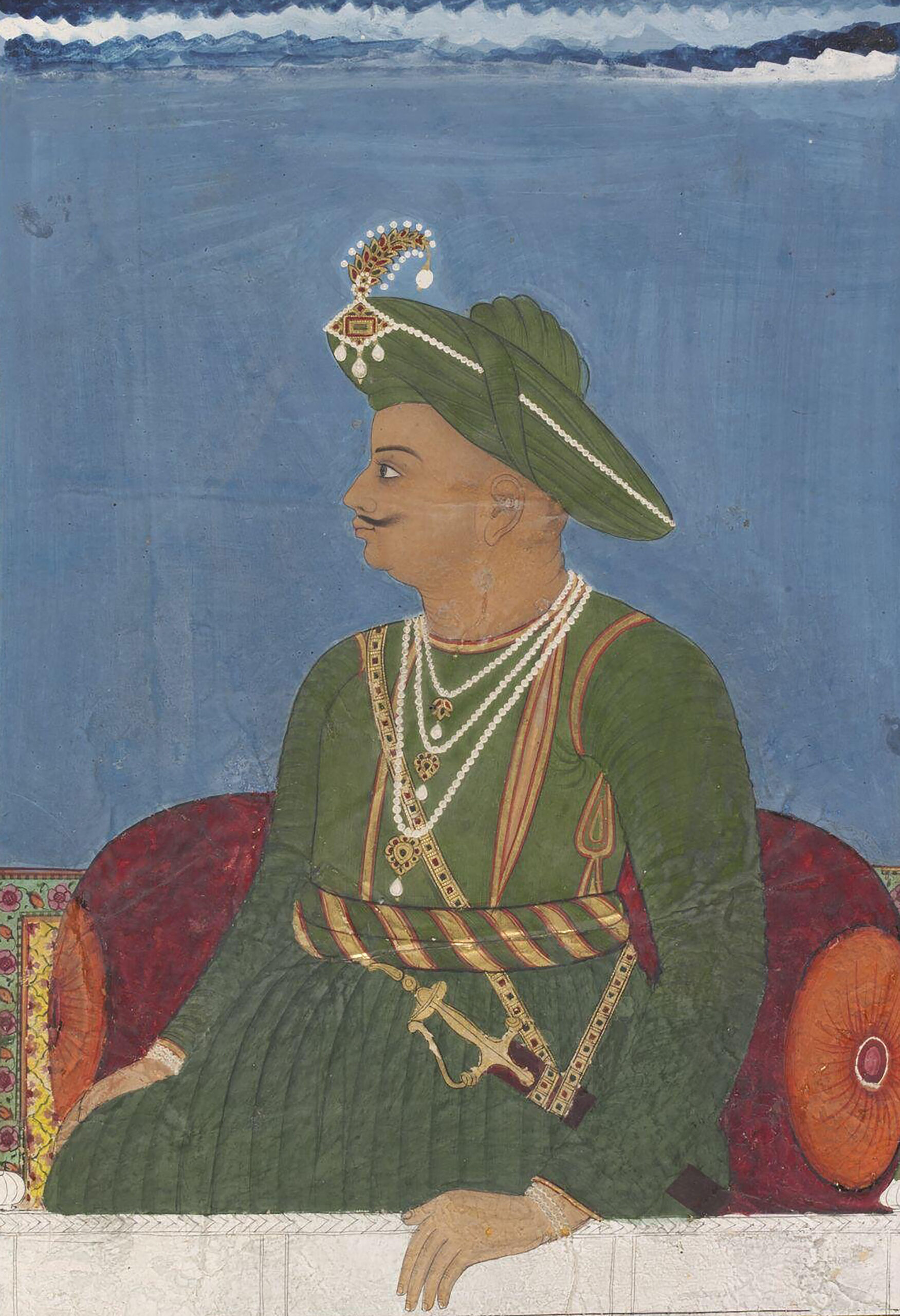
Multiple sources trace the cummerbund’s origin to India, describing its adoption by British military officers stationed there, who saw similar waist sashes worn locally and adopted them as cooler alternatives to waistcoats for formal dining in hot climates.
Language trivia:
The word is commonly described as an Anglicised form of Hindustani kamarband, with Persian roots referenced in etymology discussions.
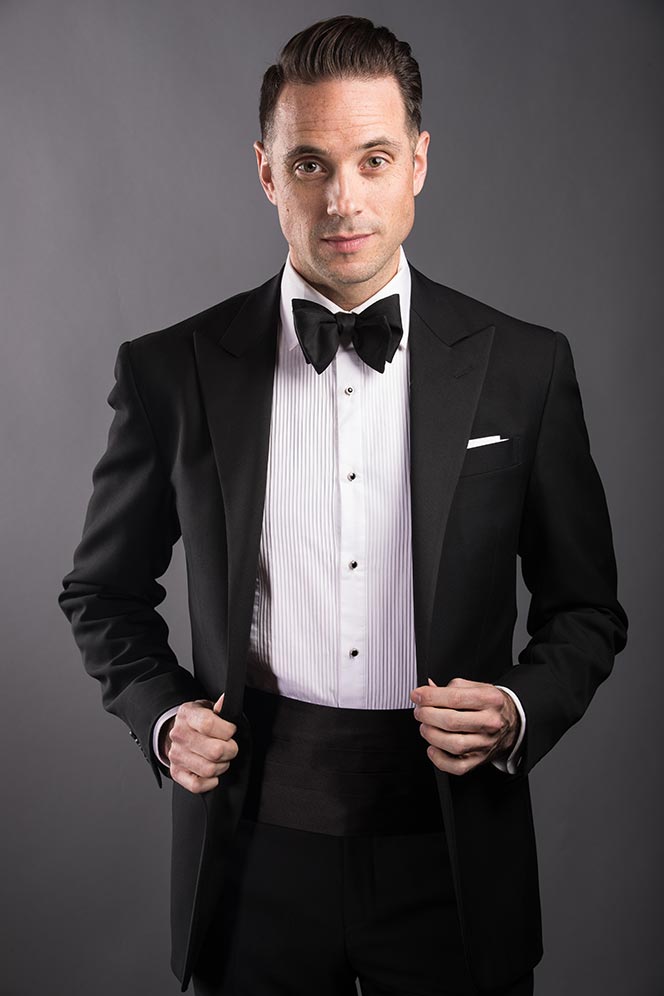
18) Why it became “black tie correct”
Black tie is designed to create a clean uninterrupted front. Waistcoats and cummerbunds both solve the same visual issue:
- shirts billow,
- trouser tops show,
- waistbands look unfinished.
So the cummerbund (or waistcoat) “finishes” the ensemble—especially with a single-breasted dinner jacket.
Gurkha Trousers ≠ The Origin of Modern Side Adjusters
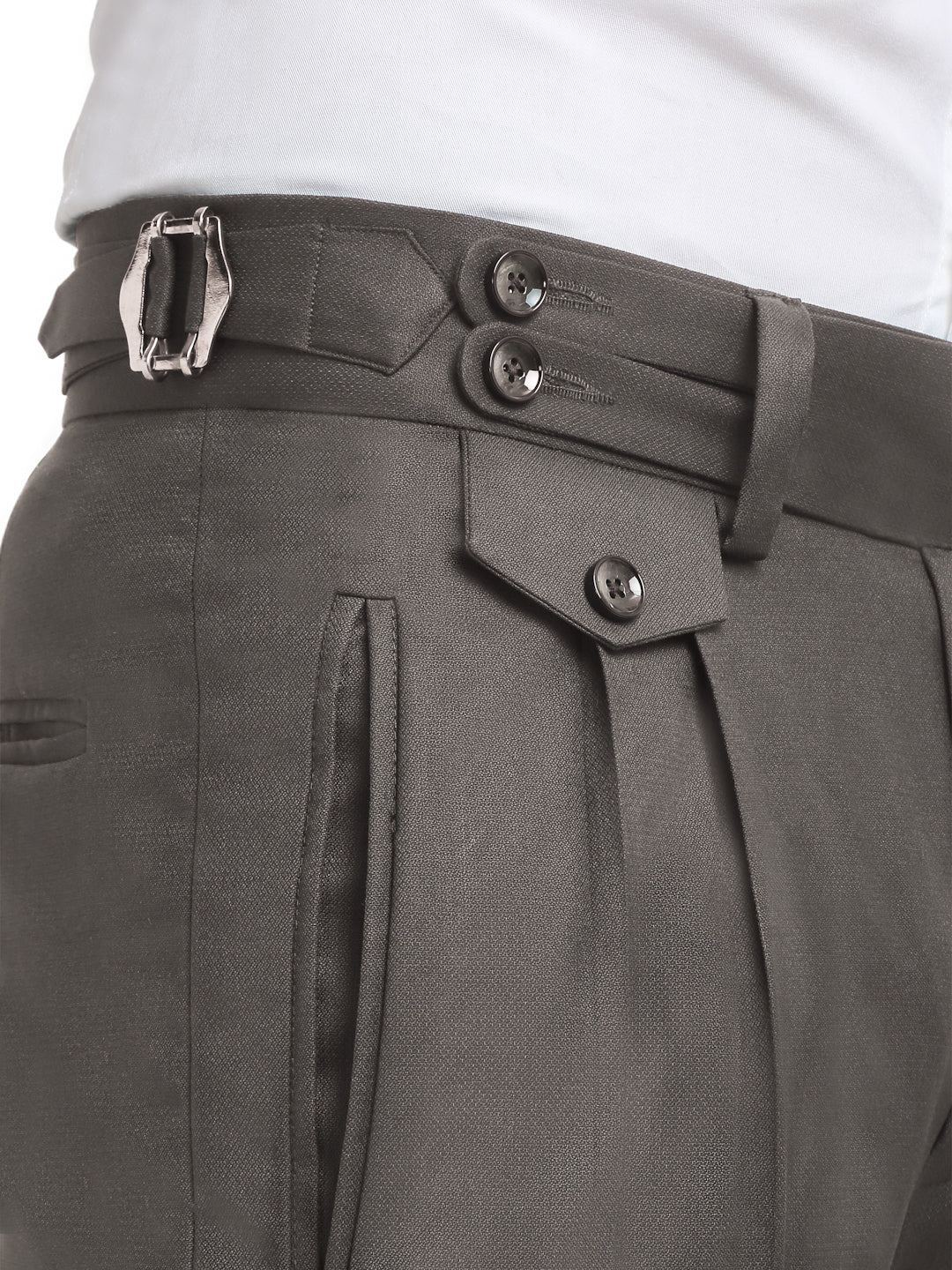
Gurkha trousers are often cited as the origin of side adjusters — but this is a misunderstanding born from visual similarity, not historical function. While both involve waistband adjustment, they are fundamentally different designs created for very different purposes.
Here’s the distinction:
- Gurkha trousers originate from military utility wear, worn by Gurkha soldiers in British service. Their defining features are a double-pleated front, wrap-over waistband, and a long fastening strap that overlaps across the waist. This construction was designed for durability, adjustability in the field, and wear with tucked shirts, not for tailored elegance.
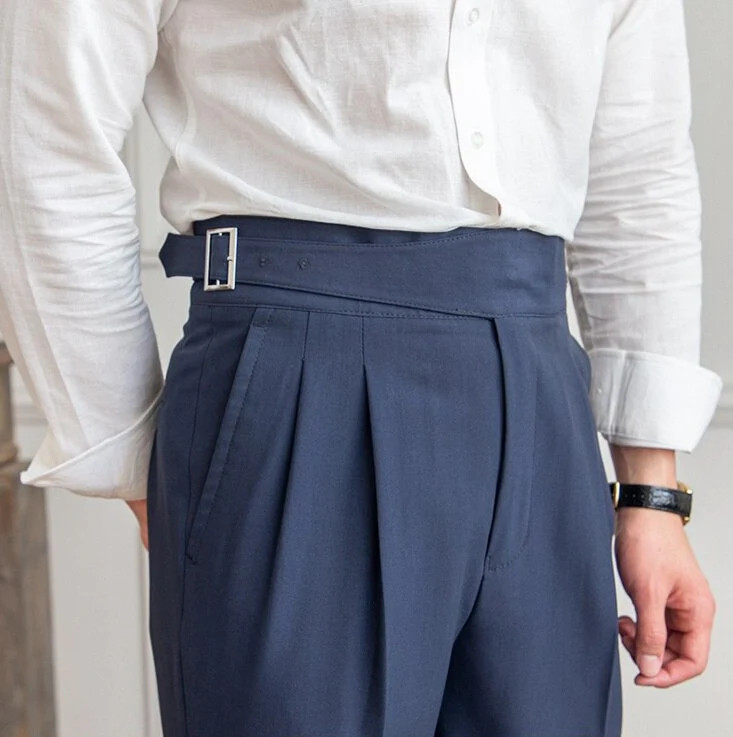
- Modern side adjusters, by contrast, were developed within civilian tailoring as a beltless waist solution intended to preserve clean lines under jackets and waistcoats. Their goal is refinement, not rugged utility.
- The Gurkha waistband pulls fabric across the front of the body, altering the silhouette, whereas tailored side adjusters tighten evenly from the sides, maintaining symmetry and drape.
- Critically, the modern side-adjuster system is most clearly traced to 20th-century tailoring innovations, particularly the self-supporting trousers popularised by DAKS in the 1930s, which were explicitly created to eliminate belts and braces in refined dress trousers — a completely different design brief from military trousers.
In short:
Gurkha trousers are a distinct military garment with their own lineage. While they may share the broad idea of waist adjustability, they are not the structural or conceptual origin of modern tailored side adjusters. To treat them as the same is to blur the line between military utility design and tailored sartorial engineering.
Part XII — The Mr. Fierze conclusion: master the waist, master the suit
Most men think suiting is decided at the shoulders. It isn’t.
The real difference between “I put on a suit” and “I look elite in a suit” happens at the waistline:
- trousers sitting at the right height,
- supported cleanly,
- finished correctly for the dress code.
High-waisted trousers give you line.
Side adjusters give you control.
The cummerbund completes black tie the way it was intended.
That’s not trend talk.
That’s tailoring literacy.
